What is the best bath lift? That all depends on your needs and requirements. Choosing the right bath lift is a deeply personal decision that can transform your daily bathing routine from a challenge into a moment of independence and relaxation.
At Absolute Mobility, we understand that every individual has unique mobility needs, bathroom layouts, and personal preferences. With over 20 years of experience helping customers across the UK regain their bathing confidence, we know that the best bath lift isn’t just about features and specifications – it’s about finding the perfect match for your lifestyle. Whether you’re considering your first mobility aid or looking to upgrade your current setup, this comprehensive guide will help you navigate the options and make an informed choice that truly works for you.
Types of bath lifts
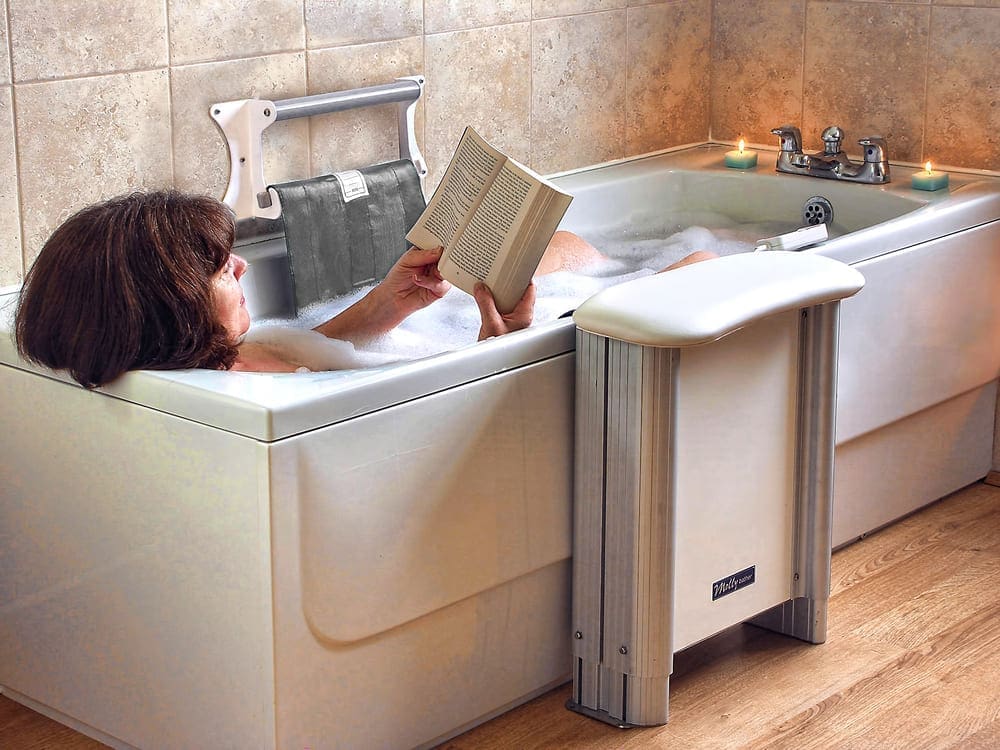
All types of bath lift provide assistance getting up and down in the bath and can be easily fitted to an existing bath tub without any major bathroom changes. A simple bath lift can be lifted into the bath tub and secured with suction cups to the bottom of the bath, allowing it to be removed when not required. Other types must be fitted to the wall and have a belt that stretches over the top of the bath, down the side and secured to a bracket at floor level.
Types
| Bath Lift Type | How It Works | Best For | Key Benefits | Considerations |
|---|---|---|---|---|
| Battery-Powered Lift | Electric motor powered by rechargeable battery, operated with handheld control | Most users seeking independence and reliability | Consistent lifting power, waterproof controls, no manual effort required | Needs regular charging, higher initial cost |
| Manual/Hand-Crank Lift | Operated by turning a hand crank to raise and lower the seat | Users with good upper body strength or caregivers available | Lower cost, no power requirements, simple mechanism | Requires physical effort, slower operation |
| Air-Powered Lift | Uses compressed air system to raise and lower the seat | Users wanting smooth, quiet operation | Very quiet operation, gentle movement, reliable mechanism | Requires air compressor, more complex installation |
| Reclining Bath Lift | Electric seat that tilts back to a comfortable reclining position | Users who enjoy longer, more relaxing baths | Comfortable bathing position, reduces pressure on back | Takes up more bath space, higher cost |
| Swivel Bath Lift | Seat rotates to help users enter and exit the bath more easily | Users with limited mobility or difficulty turning | Easier entry/exit, reduces twisting movements | More complex mechanism, requires wider bath |
| Cushioned Bath Lift | Inflatable cushion that lifts user when inflated | Users seeking portability and comfort | Lightweight, portable, soft seating surface | Slower operation, requires separate pump |
| Belt Bath Lift | Fabric belt system with harness for lifting | Users requiring additional support and security | Extra security, suitable for those with severe mobility issues | Requires caregiver assistance, more complex setup |
Limitations of bath lifts
One of the disadvantages of bath-lifts is that they do not help getting over the wall of the bath. The bather will either have to step into the bath or perch on the edge of the bath, swing their legs over and into the bath tub and then shuffle their bottom onto the bath lift seat. The manoeuvring required may mean some bathers find a bath lift is awkward to use, despite the initial promise the product suggests. Which is why, where people experience difficulty with getting into the bath in the first place, as well as getting up and down, the bath lift may not be a suitable solution.
Having said that, a bath lift can be suitable for people who can manage the bath threshold, are still fairly ambulant and whose strength will aid them when they get on and off the belt or seat. However, a belt type bath lift may “pinch” people who have had a hip operation as the belt functions like a sling, so think carefully if this applies to you.
What is the best bath lift for me?
The best bath lift for you depends on your specific mobility needs, bath dimensions, and personal preferences. If you have good upper-body strength and want a cost-effective option, a manual bath lift might suit you perfectly. However, if you prefer effortless operation and maximum independence, a battery-powered lift offers the most reliable solution.
Consider factors like your weight, how often you bathe, whether you need reclining features for comfort, and if you require additional support like swivel functionality for easier access. The key is having a professional assessment with a trusted mobility specialist who can evaluate your bathroom, understand your specific requirements, and recommend the model that will give you the safest, most comfortable bathing experience for years to come.
What are the alternatives to bath-lifts?
As you can see, whilst bath-lifts might be right for some, they may not be suitable for others. This can often lead to the question “what do I do if a bath lift is not right for me?”. The answer is that the bathroom will have to be changed. The biggest hurdle many people face is the threshold of the bath, which inevitably is a trip hazard and can lead to falls and injuries, just as much as struggling to get up and down once in the bath. People who find themselves in this situation, need to accept the time is right to change the bathroom and make it more accessible.
Other Accessible Bathing Solutions
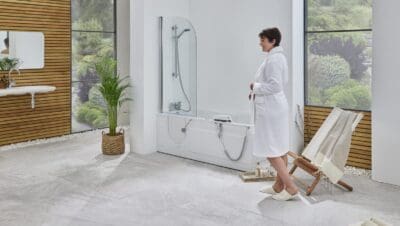
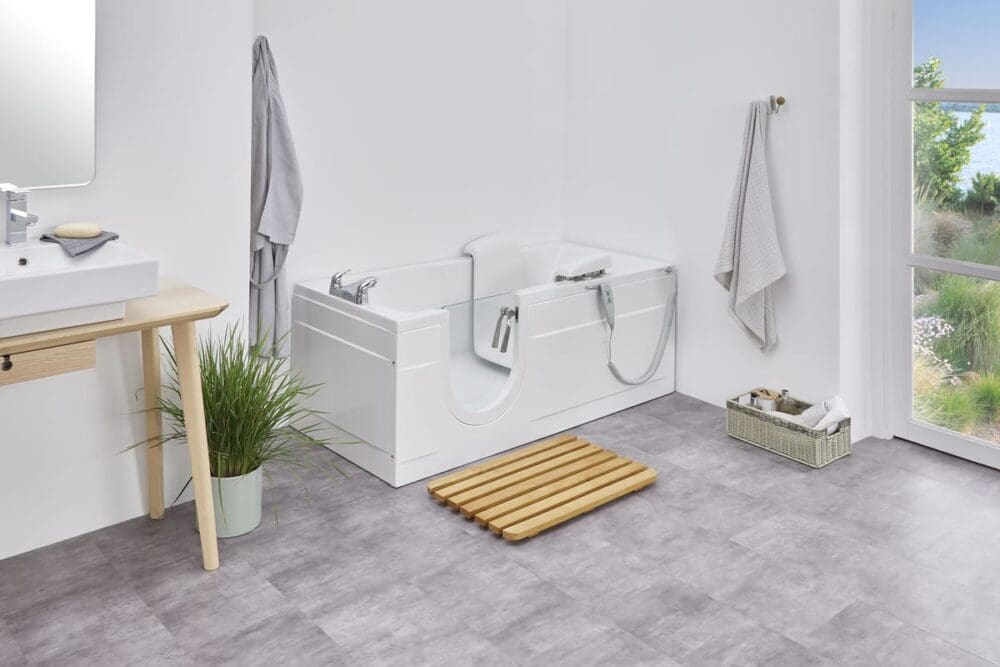
A popular alternative to a bath-lift is a walk-in bath, provided the bather can manage a step height of around 8 or 9 inches (200 – 230mm). This is roughly the same as the step on a flight of stairs. A walk-in bath will be easier to step into and is available as a full length bath, just like the standard bath tub we all know, with the addition of an opening door that provides access into and out of the bath.
Some walk-in baths have a power lift seat option available that provides assistance getting up and down in the bath. It is a more robust solution than the bath lifts mentioned above as it is built into the bath which permits a more stable and comfortable lifting and lowering experience.
Another alternative is the sit in tub style walk-in bath, which has a moulded seat in place. These types of walk-in bath are easy to use as you just have to be able to get up and down from a seated position and the taps and plug chains are in easy reach of the bather.
If you’ve found this quick overview useful and its helped you work out what is the best bath lift or perhaps helped you consider another option, explore the links below to find out more:
Learn more about bath lifts, bidets and bio risers
Should you prefer to talk with a specialist bathroom fitting firm about changing your bathroom, please call Absolute Mobility on 01491 411 041.
Frequently Asked Questions
How do you choose the right bath lift?
Consider your bath size and shape, weight capacity requirements, your specific mobility needs, and whether you prefer battery-powered or manual operation. It’s essential to have a professional assessment to ensure proper fit and functionality for your unique situation.
What are the disadvantages of a bath lift?
Bath lifts require regular maintenance, battery-powered models need charging, they take up storage space when not in use, and there’s an initial investment cost. Some users also find the seat height may not suit all bath depths.
What is the best aid to getting out of a bath?
Battery-powered bath lifts are generally considered the most effective aid, as they provide reliable, effortless lifting without requiring physical strength. Grab rails and bath boards can also help, but bath lifts offer the most comprehensive solution for safe entry and exit.
Do bath lifts work? What is the best bath lift?
Yes, bath lifts are highly effective when properly fitted and used correctly. They successfully help thousands of people bathe independently and safely, with most users reporting increased confidence and reduced fear of falling. Quality models from reputable manufacturers have excellent reliability records.