Choosing the right disabled showers and baths can transform your daily routine from a challenge into a feeling of comfort and independence. Whether you’re adapting your bathroom for yourself or helping a loved one maintain their dignity at home, the range of accessible bathing solutions available today means you don’t have to compromise on safety or style. This guide will walk you through every option available, helping you make an informed choice that fits perfectly with your lifestyle.
What Are Disabled Showers and Baths?
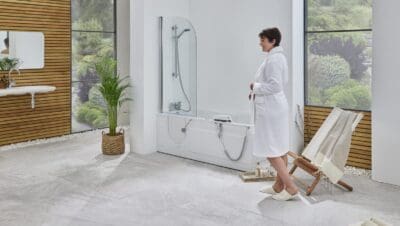
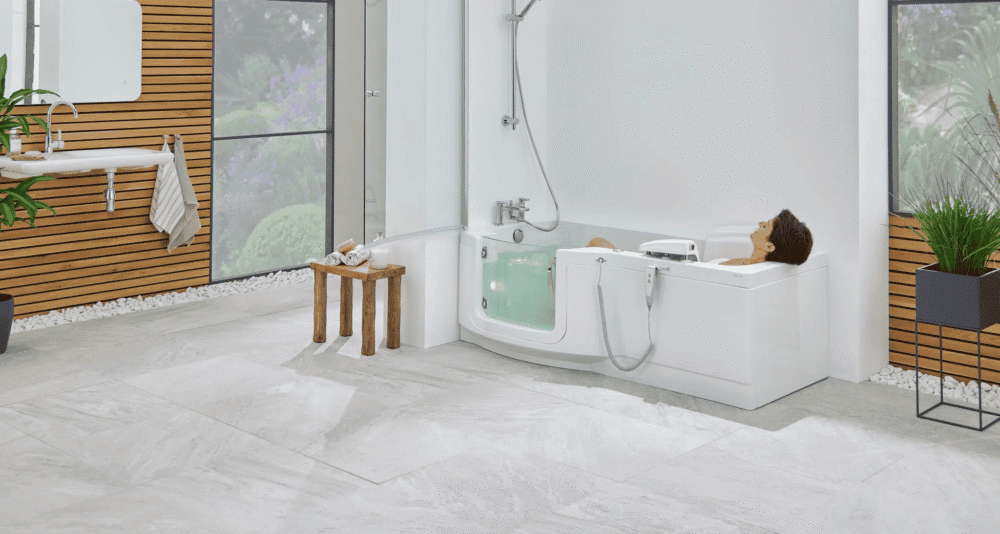
Disabled showers and baths are specially designed bathroom fixtures that provide safe, accessible bathing for people with limited mobility.
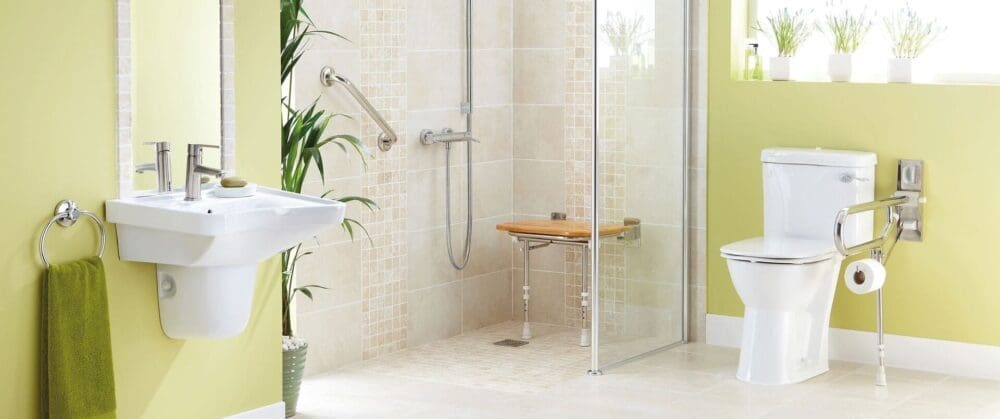
These include walk-in baths, level access showers, wet rooms, roll-in showers and wheelchair accessible bathrooms. Features typically include grab rails, slip resistant flooring and shower seats to ensure independence and safety while bathing.
These bathroom adaptations remove barriers that can make washing feel risky or impossible. They’re built around the principle that your bathroom should adapt to you, not the other way around.
Understanding Accessible Bathing Solutions
Today’s disabled showers and baths are quite unlike those you might have seen in the past. Modern bathroom adaptations are stylish and can blend seamlessly into your bathroom design whilst incorporating clever features that make daily washing safer and more enjoyable.
From powered bath seats that gently lower you into warm water, to spacious shower areas that accommodate wheelchairs or carers, each option addresses specific challenges without compromising on comfort. Thoughtful details work together to create a bathing experience that feels relaxing, rather than clinical or institutional.
Who Benefits from Mobility Bathroom Adaptations
Accessible bathing solutions support a wide range of people.
- Those living with arthritis, multiple sclerosis, or recovering from hip replacements find that adapted bathrooms reduce pain and strain.
- Older adults planning ahead appreciate how these changes help them stay in their beloved homes longer.
- Family carers also experience the benefits – safer transfers mean less physical strain and worry.
- Features like seated showers make it easier to provide dignified assistance when needed.
- Even temporary mobility issues, such as recovery from surgery or injury, become more manageable with the right bathroom setup in place.

Types of Accessible Showers
From subtle adaptations that blend into your existing bathroom, to complete transformations that reimagine the space entirely, there’s a disabled shower solution to match every mobility need and home layout. Understanding your options helps you choose the approach that best supports your independence.
Level Access and Walk-in Showers
Level-access showers feature ultra-low trays or floor-level entry, eliminating the trip hazard of traditional shower steps. These showers work brilliantly with shower screens or curtains to contain water whilst maintaining easy entry.
The minimal threshold makes them ideal if you’re unsteady on your feet or use walking aids. Many include fold-down seats and grab rails, giving you flexibility to shower standing or seated as your needs change day to day.
Roll-in Showers for Wheelchair Users
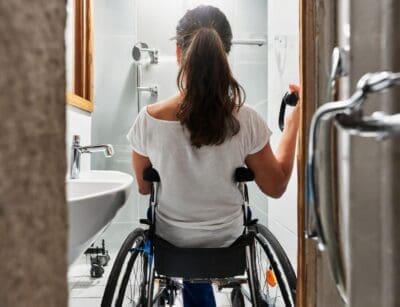
Roll-in showers provide completely barrier-free access with reinforced, gently sloped floors that allow wheelchairs to enter directly. The spacious design accommodates both you and a carer if needed, with overhead or height-adjustable shower heads for seated washing. Drainage channels sit flush with the floor, and walls are reinforced to support grab rails and shower seats at your exact transfer height, creating a truly personalised washing space.
Wet Room Solutions
Wet rooms transform your entire bathroom into a waterproof shower space, offering the ultimate in accessibility. With graded floors and fully tanked walls, you gain complete freedom of movement without doors or screens to navigate. This open-plan approach particularly suits those with complex mobility needs or larger wheelchairs, whilst creating a spacious, modern feel that can actually increase your home’s value.
Types of Mobility Baths
For those who prefer bathing to showering, or who need the therapeutic benefits of a good long soak, mobility disabled baths offer a safe way to enjoy a proper bath by reducing the risk. Modern designs mean you can maintain your bathing routine with dignity, whether you need a bath with a door for easy entry, powered assistance, or a more compact seated option.
Walk-in Baths with Doors
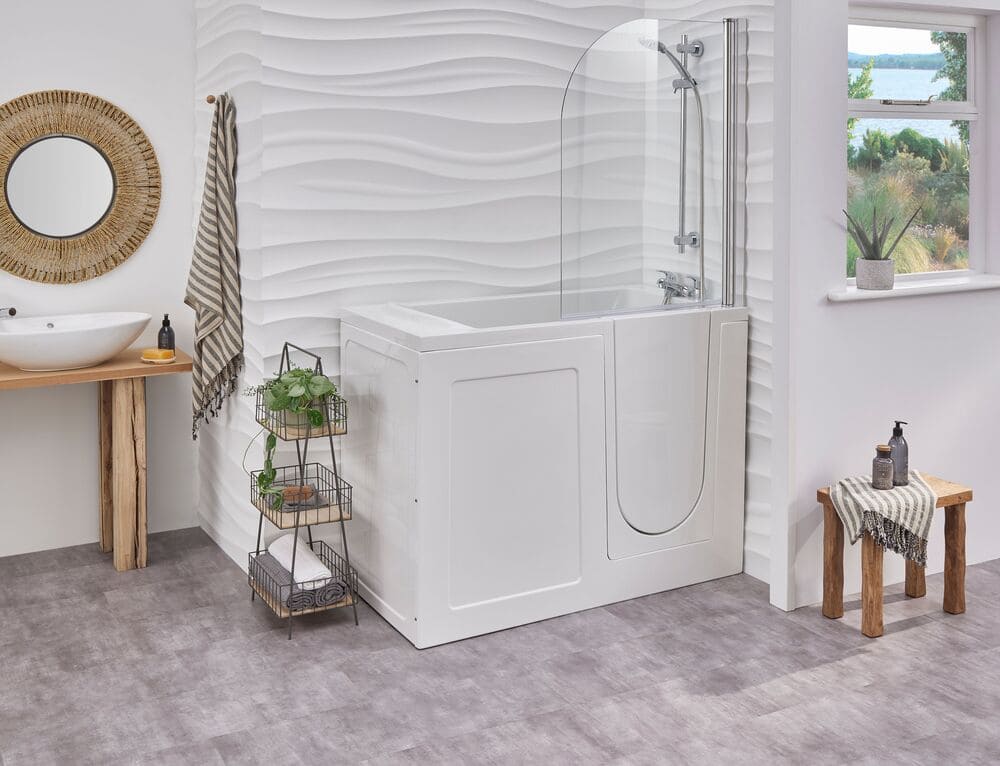
Walk-in baths feature a watertight door that opens to allow easy entry at standing height, eliminating the need to lift your legs over high sides. Once seated, you simply close the door and fill the bath around you. Quick-fill taps and rapid drainage systems minimise waiting time, while options like heated seats keep you comfortable. Many models offer the same footprint as standard baths, making them perfect replacements that don’t require major bathroom renovations.
Power-Assisted Bath Lifts
Power-assisted baths use battery or mains-powered seats that gently lower you to the bottom of the bath and raise you back up at the touch of a button. These work within standard or easy-access baths, giving you the full-depth bathing experience without physical strain. They’re particularly suited if you want to enjoy a traditional full-length soak but struggle with getting up from a low position.
Tub-Style Seated Baths
Tub-style baths provide a compact, upright bathing position that requires less floor space than traditional baths. With built-in contoured seating and a door at seated height, you step in and sit down in one smooth movement. The smaller water capacity means faster filling and lower water bills, while the upright position makes breathing easier and reduces pressure on joints. These baths suit smaller bathrooms perfectly and help those who find lying flat uncomfortable or difficult.
Disabled Shower vs Bath: Which Is Right for You?
The choice between accessible showers and baths is about finding the solution that best supports your daily routine, health needs, and home life. While some people benefit from the quick convenience of a level access shower, others find the therapeutic warmth of a walk-in bath essential for managing pain or stiffness. Understanding the practical differences helps you invest in the right solution, first time.
Assessing Your Mobility Needs
Consider how you move and what feels safest for you. Showers typically suit those who can stand for short periods or transfer easily to a shower seat, making them ideal for wheelchair users or those with good upper body strength.
Baths work beautifully if you need the therapeutic benefits of soaking for arthritis or muscle pain, or if standing causes dizziness or fatigue. The seated position in walk-in baths provides stability throughout washing, while warm-water immersion offers pain relief that showers can’t match. Your occupational therapist can help assess which option aligns with your current and future mobility.
Space and Installation Considerations
Your bathroom’s size and layout often influence what’s practical. Showers can fit into surprisingly small spaces – a corner shower might only need 800mm x 800mm, while wet rooms maximise every inch by removing enclosures entirely. They’re often quicker to install with less disruption to existing plumbing.
Baths generally need more floor space and may require reinforced flooring for the water weight. Walk-in baths need enough room for the door to open (inward or outward), while power-assisted options might need electrical connections. However, if you’re replacing an existing bath, a walk-in bath of the same dimensions could slot straight in with minimal upheaval.
Daily Living and Carer Requirements
Think about your daily routine and who helps you. Showers offer speed and convenience – perfect for busy mornings or when carers have limited time. They’re easier for carers to assist with, providing better access and reducing back strain. The quick in-and-out nature also helps if you experience fatigue.
Baths require more time but offer a different quality of experience. The filling and draining time of walk-in baths (typically 6-8 minutes each) means setting aside 30-40 minutes, but this enforced relaxation can become a treasured part of your day. If you receive professional care, discuss timing and preferences with your care team to ensure your choice fits within their visit schedule.

Costs and Funding Options
Investing in disabled showers and baths can be significant, but various funding streams and tax exemptions can make it more affordable than you might expect.
How Much Do Disabled Showers and Baths Cost?
Level access showers typically range from £7,000 fully installed, depending on the size and features you choose. Our range of walk-in baths starts around £2,500 for basic models, rising to £8,000 for options with hydrotherapy jets or powered seats. Wet room prices usually start around £12,000.
These prices include professional installation, which ensures proper sealing, drainage, and safety compliance. We also offer a price match promise and finance plans to spread the cost, making adaptations accessible without waiting for grants.
Disabled Facilities Grants and Financial Support
Disabled Facilities Grants (DFGs) provide up to £30,000 in England (£36,000 in Wales, £25,000 in Scotland) towards essential home adaptations. Your local council administers these means-tested grants, with an occupational therapist assessment determining what’s necessary and appropriate. The process typically takes 3-6 months from application to completion.
Beyond DFGs, explore disability grants, and some councils offer interest-free loans or top-up grants if DFG doesn’t cover the full costs.
VAT Exemption for Disability Adaptations
If you have a long-term illness or disability, you shouldn’t pay VAT on disabled bathrooms. This exemption covers accessible bathrooms designed specifically for your disability needs. You simply complete a declaration form confirming your eligibility. The exemption applies whether you’re buying for yourself or on behalf of someone with a disability.

Installation and Assessment Process
Understanding the journey from initial assessment to enjoying your new bathroom helps you plan ahead and feel confident about the process. As a Which? Trusted Trader and Buy With Confidence approved company, our expert team of bathroom fitters brings over 20 years of experience installing high-quality mobility bathrooms, which offer ultimate peace of mind. They work methodically to minimise disruption while ensuring every safety feature is fitted correctly and tested, transforming your bathroom into a space that truly works for you.
Getting an Occupational Therapy Assessment
An occupational therapy assessment identifies exactly what adaptations will best support your independence. Your OT watches how you currently manage bathing, discusses your challenges, and considers future needs. They’ll measure your reach, balance, and transfer abilities to recommend specific features like rail positions or seat heights.
Request an OT assessment through your GP or social services – NHS assessments are free but may have waiting lists of 8-12 weeks. Private OT assessments offer quicker access and detailed reports for grant applications.
What to Expect During Installation
Our professional installers begin by protecting your home, laying dust sheets and creating a clear path to your bathroom. Day one typically involves removing old fixtures and preparing pipework. Days two and three focus on fitting your new disabled shower or bath, ensuring perfect sealing and testing all safety features. Final touches include grab rails, finishing strips, and thorough cleaning.
Your installation team should include the same trusted fitters throughout, maintaining consistency and respect for your home. We’ll demonstrate all features, from temperature controls to seat adjustments, ensuring you feel completely confident. We will work around your routine where possible, always leaving your bathroom usable overnight if the work spans multiple days.
Timeframes and Minimal Disruption
Simple shower adaptations typically take 2-3 days, while walk-in bath installations usually take 1-2 days if replacing an existing bath. Wet rooms require 4-5 days due to tanking and gradient work. From initial assessment to completion, allow 4-6 weeks for private installations or 3-6 months if applying for grant funding.
We will advise the best schedule to minimise inconvenience. Noise is mainly confined to the first day during removal work. If you have care visits, coordinate timing so your bathroom is ready when needed. We truly care about the work we do, and understand you’re not just renovating a room but adapting your essential daily space, working efficiently whilst respecting this importance.

Take the First Step Towards Bathing Independence
Your bathroom should be a place of comfort and dignity, not a daily struggle. Whether you’re planning ahead, addressing current challenges, or helping someone you love maintain their independence, the right accessible bathing solution can transform quality of life in ways that go far beyond safety alone.
Every home and every person is unique, which is why understanding your options for disabled showers and baths is just the beginning. Our experienced advisors have spent over 20 years helping people across the UK find bathing solutions that genuinely work for their needs, lifestyle, and budget. We take time to understand how you want to feel in your own bathroom – confident, relaxed, and completely in control.
There’s no obligation to proceed after your assessment, but you’ll gain valuable insights into what’s possible for your space. We’ll measure accurately, answer your questions honestly, and provide clear recommendations without any pressure.
Your journey to easier, safer bathing starts with understanding what’s right for you.
Or call our friendly team on 0800 2922110 to discuss your needs today. We’re here to help you rediscover the simple pleasure of a relaxing wash, on your own terms.
FAQs about Disabled Showers and Baths
Can I get a free walk-in shower on disability?
You may qualify for a Disabled Facilities Grant of up to £30,000 (England) towards a walk-in shower if you have a disability and pass a means test. Contact your local council for an assessment, though waiting lists can be long.
What is the best shower for a disabled person?
The best shower depends on your specific mobility needs – level access showers suit most people, roll-in showers work for wheelchair users, while wet rooms offer maximum space and flexibility. An occupational therapist can recommend what’s most suitable for you.
How much does an accessible bath cost?
Walk-in baths typically cost £2,500-£8,000 fully installed, depending on features like powered seats or hydrotherapy jets. You may qualify for VAT exemption, saving 20% on the total cost.
How do I qualify for a walk-in shower?
You need a medical condition or disability that makes using a standard shower difficult or dangerous. For grant funding, you’ll need an occupational therapy assessment confirming the adaptation is necessary and appropriate.
What’s the difference between a walk-in bath and a wet room?
A walk-in bath has a door for easy entry but you still sit in a contained bath, while a wet room is a fully waterproofed space where the entire room becomes the shower area with no barriers or enclosures.
Is a disabled shower better than a disabled bath?
Showers offer quick, easy access and suit wheelchair users, while baths provide therapeutic soaking for pain relief. Your choice depends on your mobility, available space, and whether you need the medical benefits of immersion.
Can disabled showers be used by non-disabled people?
Absolutely – level access showers and wet rooms are simply barrier-free designs that work brilliantly for everyone, making them future-proof family bathrooms that are safer for all ages.
What’s the safest bathing option for elderly parents?
Level access showers with fold-down seats and grab rails offer the safest option for most elderly people, combining easy entry with flexibility to shower seated or standing as needed.
What type of disabled shower is best for wheelchair users?
Roll-in showers or wet rooms work best, providing barrier-free access with enough space (minimum 1.5m x 1.5m) to manoeuvre a wheelchair and transfer safely to a wall-mounted shower seat if desired
Can you get in a disabled bath without standing?
Yes – transfer boards allow sliding from wheelchair to bath edge, while some walk-in baths have doors at seated height for direct wheelchair transfers. Powered bath lifts can also lower you from a seated position.
Are there disabled baths for people over 20 stone?
Yes, reinforced bariatric baths support up to 40 stone (254kg), with wider doors, strengthened frames, and powerful lift mechanisms. Always confirm weight limits when choosing your bath.
What bathing options are available for dementia patients?
Familiar-looking baths with discreet adaptations work best, as dramatic changes can cause confusion. Clear contrasting colours for rails and seats, consistent water temperature, and calm environments help maintain bathing routines safely.