At Absolute Mobility, we understand that getting into and out of a shower safely shouldn’t mean sacrificing your independence or relying on others for assistance. A roll in shower removes the barriers that make bathing difficult, allowing you to shower with confidence, comfort, and the freedom to do it your way.
In this complete guide, we’ll walk you through what a roll in shower is, the real costs involved, and how it might be the answer to maintaining your quality of life at home for years to come.

What Is a Roll In Shower?
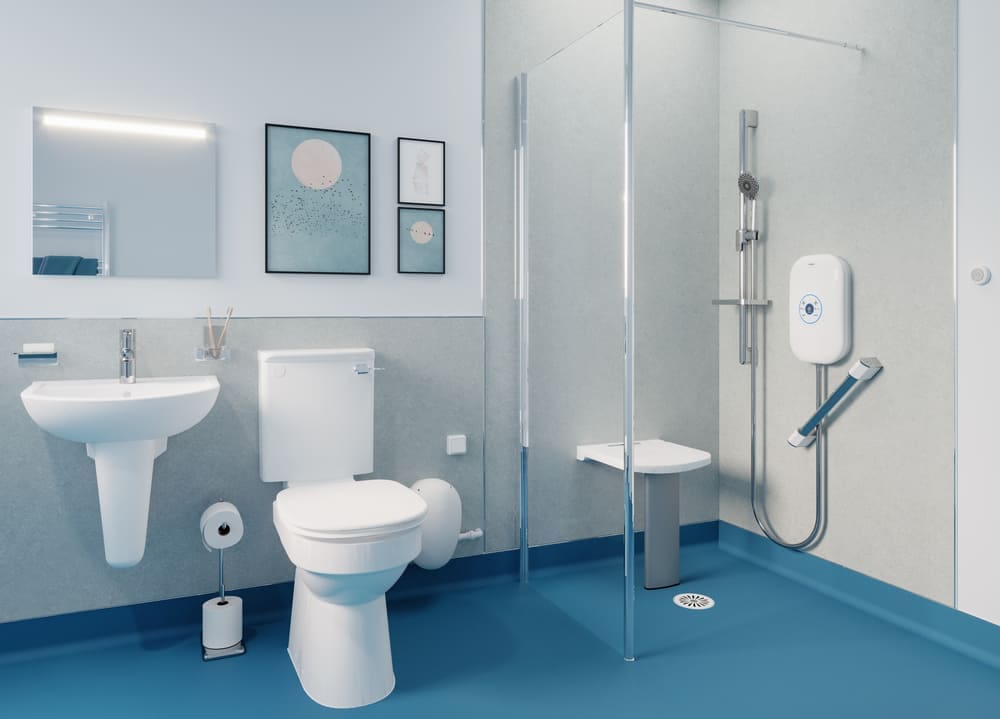
A roll in shower is an accessible bathing solution with no step or door, featuring a level-access shower tray that can be easily entered by people with reduced mobility, wheelchair users, or elderly individuals.
Key Characteristics and Definition
A roll in shower is a gateway to independence and peace of mind for people managing reduced mobility, using a wheelchair, or those with declining physical abilities who need extra support at home.
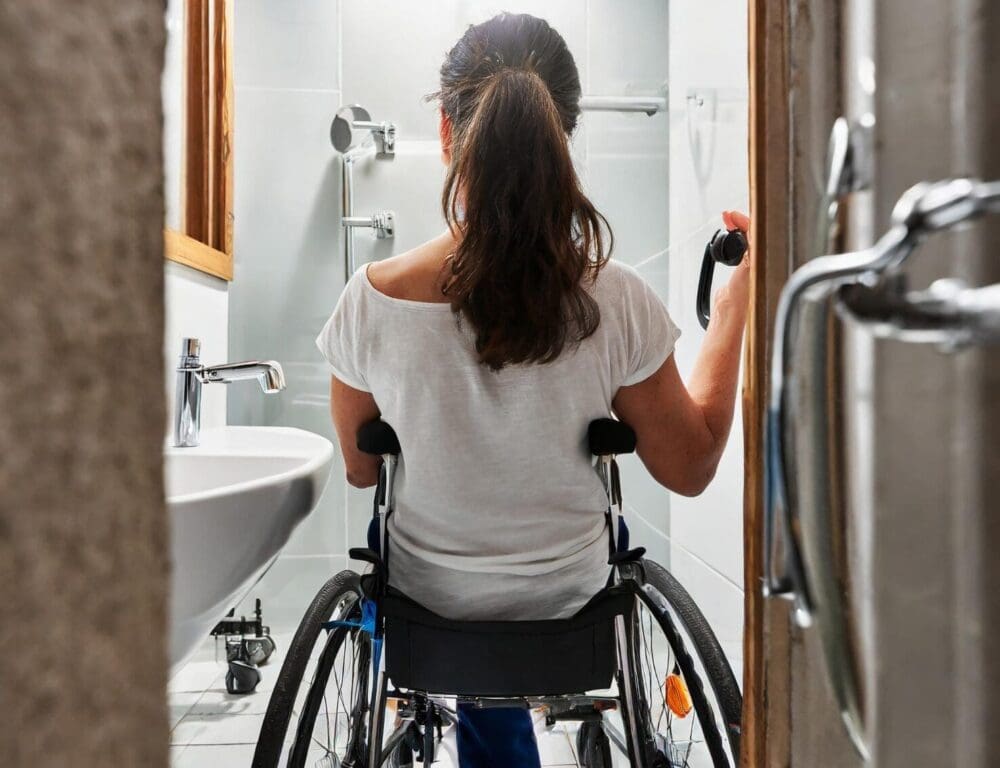
A roll in shower gets its name because wheelchair users can literally roll directly into the shower without navigating any steps or barriers. There’s no raised edge to lift over, no complicated door mechanism to manage, and no need to balance on one leg while stepping up and over a traditional shower tray. The shower tray sits either at the same level as your bathroom floor (level access) or with only a very shallow step of 40-100mm (low-level), making entry smooth and safe whether you’re using a wheelchair, walker, or simply need support due to balance issues or joint pain.
The key features that define a roll in shower are:
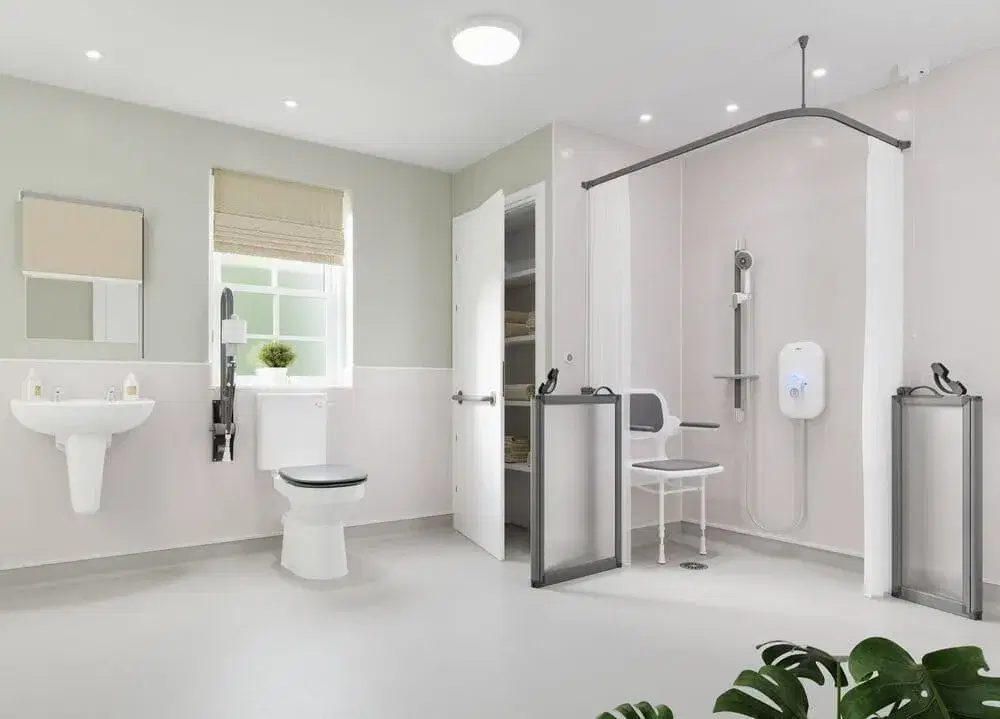
- Open design – No door or enclosure at the entrance. Instead, the shower area is typically separated from the rest of the bathroom by one or two glass panels, creating a defined showering space without the barrier of a door that needs opening and closing.
- Low or level-access entry – This is what makes a roll in shower truly accessible. The shower tray is deliberately designed to minimise or completely eliminate the step, allowing easy entry from any mobility position.
- Dedicated shower tray – Unlike a wet room (which we’ll compare later), a roll in shower has a shallow tray that contains the water and directs it toward the drain. This keeps water contained to the shower area, protecting the rest of your bathroom.
- Safety-focused design – Grab rails are typically integrated into the design, non-slip surfaces prevent slipping, and the whole setup prioritises stability and support. Many roll in showers can also include a built-in shower seat or bench, allowing you to shower while sitting if free standing for prolonged periods becomes uncomfortable.
- Flexible customisation – A roll in shower can be adapted to your specific needs and bathroom layout. Whether you have a small bathroom, an awkward corner, or specific mobility requirements, the design can be tailored. This flexibility is one reason why roll in showers have become such a popular accessible bathing solution in the UK.
Whether you’re concerned about your current mobility or supporting a loved one, a roll in shower offers a tangible way to maintain independence in one of the most important rooms of your home.
Why Choose a Roll In Shower for Accessibility?
Independence and Safety Benefits
A standard shower presents a safety risk when mobility is limited. Stepping over a high tray, balancing while reaching for grab bars, or struggling with a slippery surface can lead to falls – one of the most common causes of serious injury for older and disabled people.
Because entry is level (or nearly level), there’s no awkward stepping motion that challenges your balance. For many people, this difference is profound – it transforms showering from something anxiety-inducing into something genuinely relaxing.
Perhaps most importantly, a roll in shower allows you to maintain dignity and independence. You can wash yourself without waiting for help, without needing to ask a family member to assist, without feeling vulnerable or exposed. That independence matters for your physical health, your mental wellbeing, and your sense of self.
Who Benefits Most
Roll in showers (sometimes also called walk-in showers) are ideal for anyone who finds a standard shower unsafe, uncomfortable, or impossible to use independently:
- Older adults experiencing age-related mobility changes, balance issues, or arthritis that makes standard showers increasingly difficult.
- Wheelchair users who need barrier-free access to showering facilities, whether permanently or temporarily.
- Disabled people with reduced mobility, chronic pain conditions, or conditions affecting balance and coordination.
- People recovering from illness or surgery who need accessible bathing while regaining strength and confidence.
- Carers and family members supporting someone with mobility challenges, as the spacious design accommodates assisted showering when needed.
If climbing into a traditional shower tray or managing a high step feels risky, a roll in shower is worth exploring.
Ageing in Place Advantages
Many people want to age in their own home, surrounded by familiarity and independence. A roll in shower is one of the most effective ways to make that possible.
Rather than waiting for a mobility crisis such as an accident, illness, or sudden decline, installing a roll in shower now gives you peace of mind and flexibility for the future. Your mobility may remain stable for years, or circumstances may change. Either way, you’re prepared. A well-designed roll in shower accommodates a range of mobility levels, meaning you won’t need a costly full bathroom conversion later if your needs evolve.
That peace of mind and just knowing you can shower safely, independently, and with dignity for years to come is invaluable.
Roll In Shower vs Alternatives
Roll in Shower vs Wet Room (Comparison Table)
| Feature | Roll In Shower | Wet Room |
| Entry Type | Low-level or level-access shower tray | Completely level floor, no tray |
| Cost | £6,595–£9,000+ | £10,000–£15,000+ |
| Installation Time | 3–5 days | 7–14 days (more structural work) |
| Bathroom Space Required | Works in smaller bathrooms | Requires larger space or full room conversion |
| Waterproofing | Standard waterproofing around tray | Complete room waterproofing required |
| Wheelchair Access | Good for most wheelchair users | Optimal for full wheelchair independence |
| Carer Assistance | Spacious design accommodates help | Maximum space for assisted showering |
| Future-Proofing | Suitable for moderate mobility changes | Better for significant future mobility decline |
| Maintenance | Easy to clean, minimal fittings | Requires some drainage maintenance |
| Existing Bathroom Integration | Fits within current layout | Often requires bathroom redesign |
Roll in Shower vs Walk-In Bath
This is one of the most common questions we’re asked: should you choose a roll in shower or a walk-in bath?
Both are accessible bathing solutions, but they serve different preferences and mobility levels.
A walk-in bath has a door that allows you to step into the tub at a much lower height than a standard bath. The great appeal of a walk-in bath is that it allows you to enjoy soaking in warm water, which many people find therapeutic and deeply relaxing. For people with arthritis or chronic pain, a warm bath can be genuinely beneficial for both physical comfort and mental well-being.
However, a walk-in bath still requires a reasonable level of mobility. You need to step into the tub, lower yourself, sit down, and then reverse the process to get out. Unless of course, you use a walk in bath with a lift, in which case these challenges are eradicated.
A roll in shower, by contrast, requires minimal mobility to enter. There’s no stepping, balancing, or lowering yourself into a confined space. If standing for long periods is difficult, you can add a shower seat and shower sitting down. If you need carer assistance, the open design makes it easier for someone to help you safely. A shower is also quicker and requires less physical exertion than a bath.
It comes down to personal preference and your current mobility level. If you genuinely love baths and have the mobility to use a walk-in bath safely, that might be your choice. But if mobility is limited or declining, or if you prefer quick, efficient showering, a roll in shower is almost always the more practical and safer option. Many people assume they need a bath because they’ve always had one, but once they experience the ease and independence of a roll in shower, they never look back.
When a Roll In Shower is the Right Choice
Not every accessible bathing solution suits every person. So how do you know if a roll in shower is right for you?
A roll in shower is likely your best choice if:
- You have limited mobility or balance issues and find standard showers unsafe or anxiety-inducing. The level entry and grab rails make showering genuinely comfortable.
- You use a wheelchair (full-time or part-time) and need barrier-free access to showering. A roll in shower accommodates wheelchairs smoothly, and the open design means a carer can assist without cramped, awkward positioning.
- You’re managing multiple accessibility needs in your bathroom and need to balance cost with functionality. A roll in shower is typically 40-60% less expensive than a wet room, freeing up budget for other essential adaptations (raised toilet, accessible sink, etc.).
- You have a smaller or awkwardly-shaped bathroom where a wet room conversion isn’t practical. Roll in showers are flexible—corner showers, recessed designs, and compact layouts all work well.
- You prefer quick, efficient showers over long baths. A roll in shower is ideal if you’re not someone who enjoys soaking for extended periods.
A roll in shower may not be ideal if:
- You have a strong preference for baths and your current mobility allows you to use a walk-in bath safely. Personal preference matters – if you genuinely need and enjoy a bath, that’s worth considering.
- You have a generous budget and prefer a luxury experience. A wet room creates a more luxurious, open feel that some people value highly. It can also add value to your home.
Our approach at Absolute Mobility is never to push one solution over another. During a free home consultation, we assess your current needs, listen to your preferences, discuss your long-term outlook, and consider your budget. Then we recommend the option that genuinely fits your life – not ours! We’re here to help you make the right choice for your unique circumstances.

Roll In Shower Costs in 2026
One of the first questions people ask is: how much does a roll in shower actually cost? It’s a fair question, and one we’re committed to answering honestly. With over 20 years experience installing accessible bathrooms, shower rooms and wet rooms, we’re confident that our prices are better than any of our competitors. With our “Price Match Promise” we promise to match any like-for-like quote – and throw in a £250 Gift Card too.
The truth is, cost varies significantly depending on your bathroom size, current plumbing and the shower features you choose. You can also spread the cost of a beautiful new accessible bathroom over time with our easy-to-understand finance solutions. We will provide you with an accurate, all-inclusive personal quote following a consultation, but here we can offer realistic ranges to help you plan your budget before calling our friendly team.
What’s Included in the Price
When you invest in a roll in shower from Absolute Mobility, the price includes far more than just the fixture itself.
The installation package typically covers:
- Professional installation by our experienced, DBS-checked installers who understand mobility-specific requirements and best practices.
- The shower tray itself (low-level or level-access, depending on your choice), designed to support wheelchair weight and mobility aids.
- Glass enclosure or panels that define the shower area and protect the rest of your bathroom from splash and spray.
- Plumbing work to connect the shower to your existing water supply and drainage system, adapted to your bathroom layout.
- Shower controls and fixtures, including mixer taps or a dedicated shower valve, thermostatic controls (for safety), and a shower head.
- Grab rails and safety features are integrated into the design to provide genuine support and stability.
- Waterproofing and sealing around the tray and surrounding areas to prevent water damage.
- Site preparation, including any minor adjustments to your existing bathroom, removal of old fixtures if needed, and thorough site cleanup once the work is complete.
- Initial consultation where we visit your home, assess your needs, discuss accessibility requirements, and provide a detailed, no-obligation quote.
What’s not always included are premium add-ons like a built-in shower chair, body dryers, luxury finishes, or significant structural work. That’s why understanding the different options is important.
Budget, Mid-Range, and Premium Options
Budget Roll In Shower: £6,800–£7,500
A budget option doesn’t mean cutting corners on safety or quality. It means choosing a straightforward, functional roll in shower that does exactly what it needs to do..
Who chooses this: People prioritising cost-effectiveness, those with good current mobility who want a practical solution, or those adapting a spare bathroom with existing good plumbing access.
Mid-Range Roll In Shower: £7,800–£9,500
Most people find the mid-range option strikes the best balance between quality, features, and cost.
Who chooses this: People with moderate mobility challenges, those planning to age in place, families wanting a solution that works for multiple household members, or anyone prioritising comfort alongside accessibility.
Premium Roll In Shower: £9,800–£13,000+
Premium installations are about creating a luxury accessible bathing experience that doesn’t compromise on style or functionality.
Who chooses this: People with significant mobility challenges wanting maximum comfort, those investing in long-term ageing in place, homeowners prioritising aesthetics alongside accessibility, or anyone wanting a spa-like accessible bathing experience.
Important Notes on Pricing:
Every installation is unique. We always provide a personalised quote after a home consultation. The final cost depends on your specific bathroom layout, existing plumbing condition, accessibility requirements, material choices, and any unexpected issues discovered during installation.
We never surprise you with hidden costs. Once we’ve assessed your bathroom and discussed your needs, we provide a detailed, transparent quote. That’s what you’ll pay (unless you request additional features during installation).
Installation Timescale and Disruption
A common concern is disruption to your home and daily life. How long will the work take? When will you have no bathroom access?
Most installations take 3-5 days. Larger or more complex installations that require some restructuring could take 7–10 days. We’ll be clear about this timeline during your initial consultation.
Bathroom access during installation:
Most people arrange to use a second bathroom during installation, or we work with you to sequence work to minimise disruption. We always discuss this upfront and help you plan around it.
Minimising disruption:
We schedule work around your life. If you prefer installation during a quieter time, we can arrange that. We arrive on time, work efficiently, and keep disruption to an absolute minimum. Our teams clean up after themselves daily, so you’re not living in a construction zone.
After installation:
Once we’ve finished, your roll in shower is fully functional, and you can start to enjoy it straight away. We’ll give you a thorough walkthrough of how to use all the features, answer any questions, and ensure you’re completely confident and comfortable.
Quality assurance:
All our work comes with a warranty. We stand behind what we install, and if any issues arise, we’re here to support you. Our installation is focused, professional, and designed to get you back to normal life quickly while delivering quality that lasts for years.

Transform Your Bathroom – Book Your Free Home Assessment
How Absolute Mobility’s Consultation Works
The first step is a free, no-obligation home visit, during which we take the time to understand your needs.
Our accessibility consultants will visit your bathroom, discuss your current challenges and concerns, listen to your preferences, and assess what’s realistic for your space and budget. We ask questions about your mobility now and your long-term plans—because the right solution depends on understanding your full picture, not just what you need today.
After the consultation, we’ll provide a detailed, transparent quote with no hidden costs. We’ll explain your options clearly, answer every question, and give you time to decide. There’s no pressure- we’re here to help you make the right choice for your circumstances.
If you decide to proceed, our DBS-checked installers handle everything from start to finish. We’re professional, respectful, and treat your home with genuine care.
Next Steps
Ready to explore how a roll in shower could transform your bathroom and your independence? Contact Absolute Mobility today to book your free home assessment.
Call us on 0800 2922110, visit our Berkshire showroom to see our range firsthand, or request a visit from our mobile showroom – we’ll bring the consultation to you.
At Absolute Mobility, we’re not just about installing showers. We’re about transforming lives through thoughtful, personalised, accessible bathroom solutions. Let’s explore what’s possible for you.
Roll In Shower FAQs
What does a roll in shower mean?
A roll in shower is an accessible bathing solution with no step or door, featuring a low-level or level-access shower tray that can be easily entered by people with reduced mobility, wheelchair users, or elderly individuals. It combines safety with independence through integrated grab rails, non-slip surfaces, and optional shower seats.
How much does it cost to install a roll-in shower?
Basic roll in showers cost £6,800–£7,500, mid-range options £7,800–£9,500, and premium installations £9,800–£13,000+. Final cost depends on your bathroom layout, plumbing condition, materials chosen, and additional features. We always provide a transparent quote after a free home assessment with no hidden costs.
How long does it take to install a roll-in shower?
Standard installations typically take 3–5 days. More complex projects involving significant replumbing or structural work may take 7–10 days. We’ll confirm the exact timeline during your consultation, and we work to minimise disruption to your home.
Can a roll-in shower be installed in a small bathroom?
Absolutely. Roll in showers are actually ideal for smaller bathrooms. They take up less space than a traditional bath, create a sense of openness, and can be customised to fit corners or unusual layouts. We design solutions that maximise every inch of your available space.
Do I need planning permission for a roll-in shower installation?
Generally, no. A roll in shower is a standard bathroom adaptation and doesn’t usually require planning permission. Building Regulations approval may be needed depending on the scope of work, but this is straightforward and we handle it as part of the installation process.
What happens to my existing shower or bath?
We remove your existing fixture safely and professionally, prepare the space, and install your new roll in shower. If you’re concerned about disposal or recycling, we’ll discuss options with you. Our teams clean up thoroughly after themselves, leaving no trace except your beautiful new accessible bathroom.
Can I get funding or grants for a roll-in shower installation?
Yes. The Disabled Facilities Grant (DFG) through your local council can help fund bathroom adaptations, including roll in showers. You may qualify if you’re disabled, have a low income, and own or rent your home. Some councils also offer additional support. We can discuss eligibility during your consultation and help you explore what’s available for your circumstances.