If you are living with arthritis, even the simplest daily tasks may feel like a struggle, and you may ponder the question of how to get out of the bath with arthritis. At Absolute Mobility, we understand that stiffness, pain, and reduced grip strength can make showering and bathing feel unsafe. This guide is for you.
Table of Contents
With over 20 years of experience at Absolute Mobility, we have dedicated ourselves to serving people with reduced mobility and our access to a large range of baths and showers adapted for ease of use. Our passion stems from a genuine concern for people’s well-being and ensuring they receive the high-quality care and the right tailored bathroom solutions that they deserve. Here, we look at a recent bathroom transformation we completed for Ms T, a customer who has arthritis in her shoulders and elbows.
Understanding the Challenge
Mrs T was enjoying her retirement by refurbishing her home room by room, and now turned her attention to the bathroom. Due to her reduced mobility, her bathroom was becoming challenging to use, and she started to wonder how to get out of the bath with arthritis.
Why Arthritis Makes Bathing Difficult
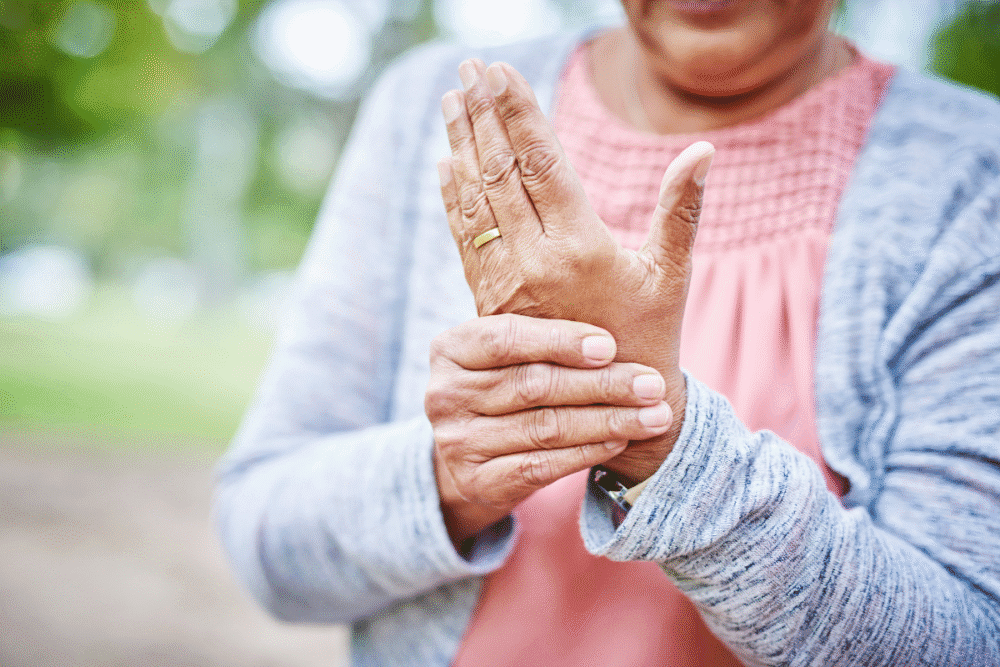
Arthritis is not a single disease, but rather a general term for conditions that cause joint inflammation, which leads to pain, swelling, and stiffness. Arthritis can make everyday tasks such as bathing increasingly challenging and sometimes painful. The inflammation and stiffness in joints, particularly in the shoulders, wrists, and hands, can make it difficult to reach across your body to wash properly or lift your arms to shampoo your hair. It also makes it challenging to get in and out of the bath safely and confidently.
Risks of Getting in and Out of the Bath
As a lifelong bath user, Ms T wished to continue bathing, but needed a bath that would be easy to step into with stiff, painful elbows and shoulders. She also required help with getting up and down once she was in the bath – a common requirement for people with reduced mobility in the upper body. Getting in and out of a bath with arthritis can present significant bathroom safety risks, particularly for those with mobility challenges or age-related changes in balance and strength.
The high sides of conventional baths require you to lift your leg over an 18-inch side of the bath whilst balancing on one foot – a movement that becomes increasingly precarious when dealing with wet surfaces and soapy hands. In such situations, a walk-in bath with a power-lifting seat or belt is ideal, as it provides lifting assistance when getting in and out of the bath tub.
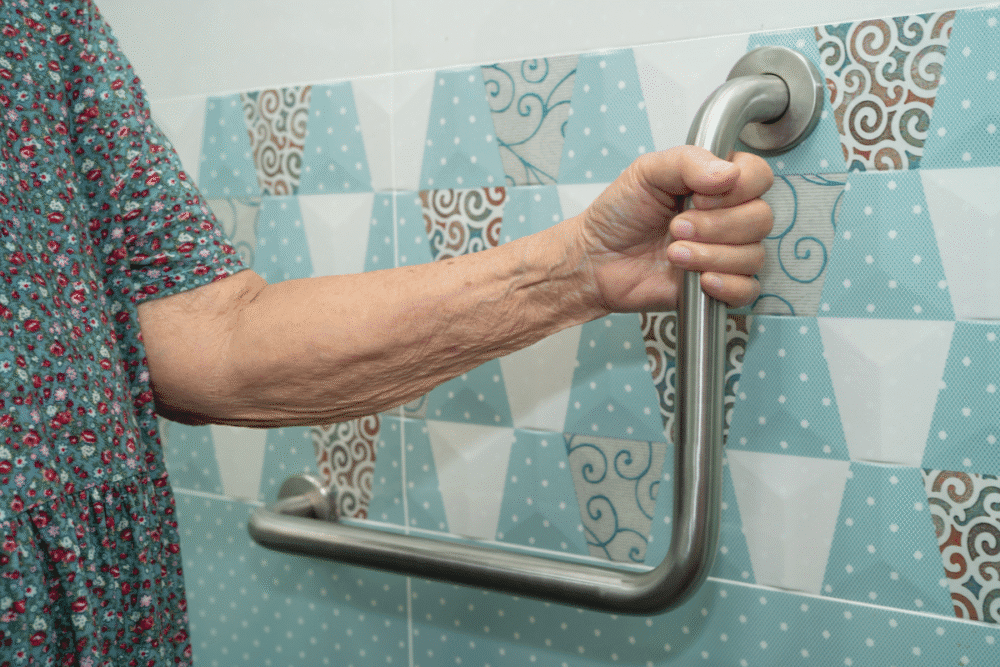
How to Get Out of the Bath with Arthritis: 4 Practical Tips
Getting out of the bath with arthritis can feel daunting, but the right approach and equipment can make the process much safer. Small changes can reduce strain on your joints and give you more confidence when bathing.
1. Use Sturdy Grab Rails for Support
Installing grab rails near the bath’s edge is one of the simplest ways to improve safety.
If you’re wondering how to get out of the bath with arthritis, then grab rails are a good affordable bathroom adaptation to help you. They provide a strong, steady handhold when you’re lowering yourself into the bath or standing up to get out. Fixed securely to the wall, they reduce the need to put pressure on painful joints and help you balance more easily.
2. Take it Slowly and Plan Your Movements
When dealing with arthritis, rushing only makes bathing more difficult and stressful. Move at your own pace, making sure you have support in place before attempting to stand. Plan each movement carefully, from where you’ll place your hands to how you’ll step out. Taking your time reduces strain and keeps you safe.
3. Try a Walk-In Bath
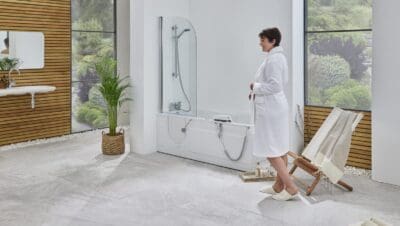
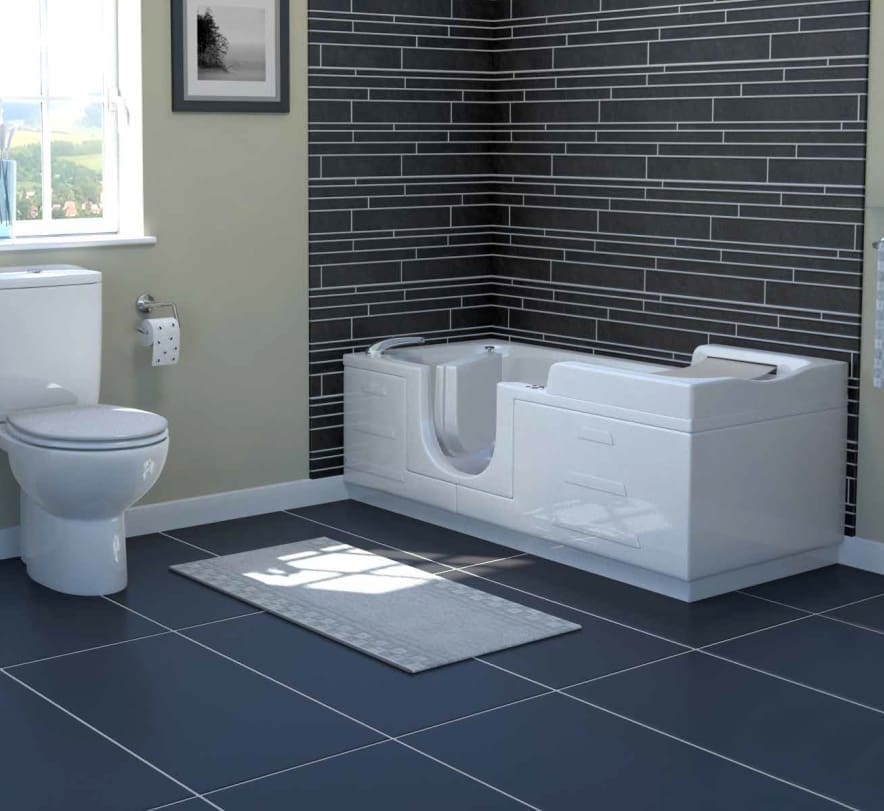
A walk-in tub-style bath allows you to bathe in an upright position on a supportive seat, providing a truly relaxing bath experience. This means you don’t have to lower yourself fully into the tub. You can wash comfortably while seated and then step out with far less effort, which means you will never need to worry about getting yourself back upright.
4. Consider Non-Slip Bath Mats and Flooring
Slippery surfaces increase the risk of falls, especially when combined with joint stiffness. Non-slip flooring is designed to provide extra grip, especially in wet and humid conditions, thereby reducing the chances of slips and falls and helping you move with greater stability and confidence.
Making a Bathroom More Arthritis-Friendly
Ms T booked a time and date to visit our showroom in Henley on Thames and view some examples of our walk-in baths. The visit helped her decide that a walk-in bath would be suitable for her use, as she could compare it to the shower mock-ups also available in the showroom. Having assured herself that a walk-in bath would allow her to continue bathing comfortably, a home appointment was arranged for one of our advisors to visit and provide a design and quote.
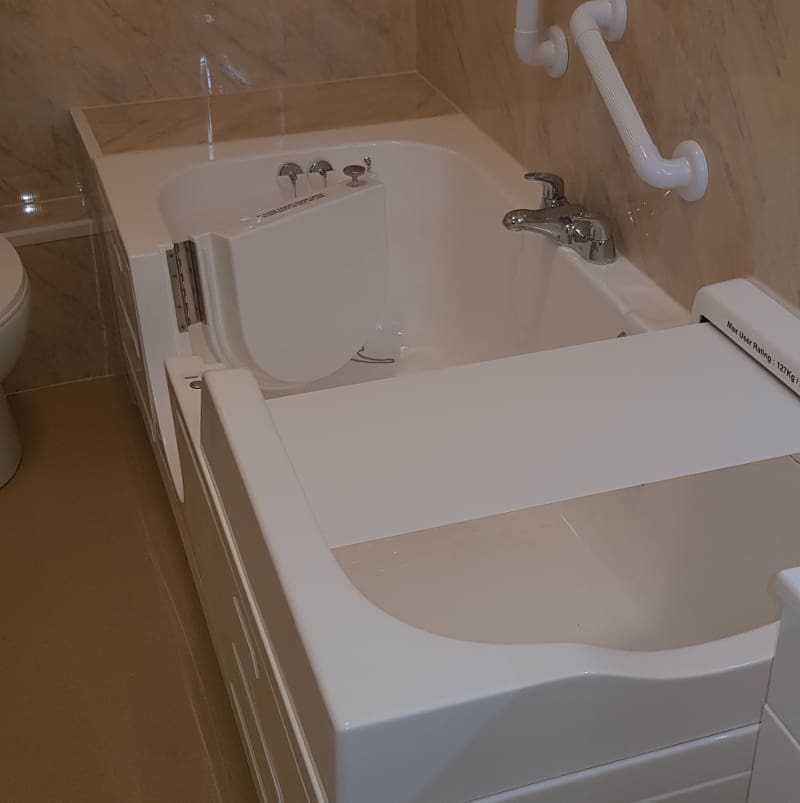
When our advisor visited Ms T, he took one of our mobile showrooms to her home with two examples of walk-in baths on board. One of the baths was a Luxor walk-in bath, featuring a walk-in door for easy step-in/step-out access, as well as a powered lifting belt to provide assistance with getting up and down in the bath. This helped Ms T make the final decision that the Luxor and its lifting belt was the best choice for her and her needs.
Whilst on the home visit, our advisor was also able to assess the water system, measure up the bathroom and agree on the specification of the other bathroom fittings to refurbish the bathroom. A few days later, Ms T accepted our quote and placed an order for a full bathroom refurbishment with a new Luxor walk-in bath. The installation began a few weeks later, on a Wednesday and was completed the following Friday. The layout or her original bathroom was to be retained in the refurbishment.
How We Transformed Mrs T’s Bathroom
Whenever we undertake bathroom works, we always ensure we inform the customer when the water is being turned off and on and the WC is going to be removed, so that access to the facilities can be maintained. And of course, we always ensure the WC is in working order overnight.
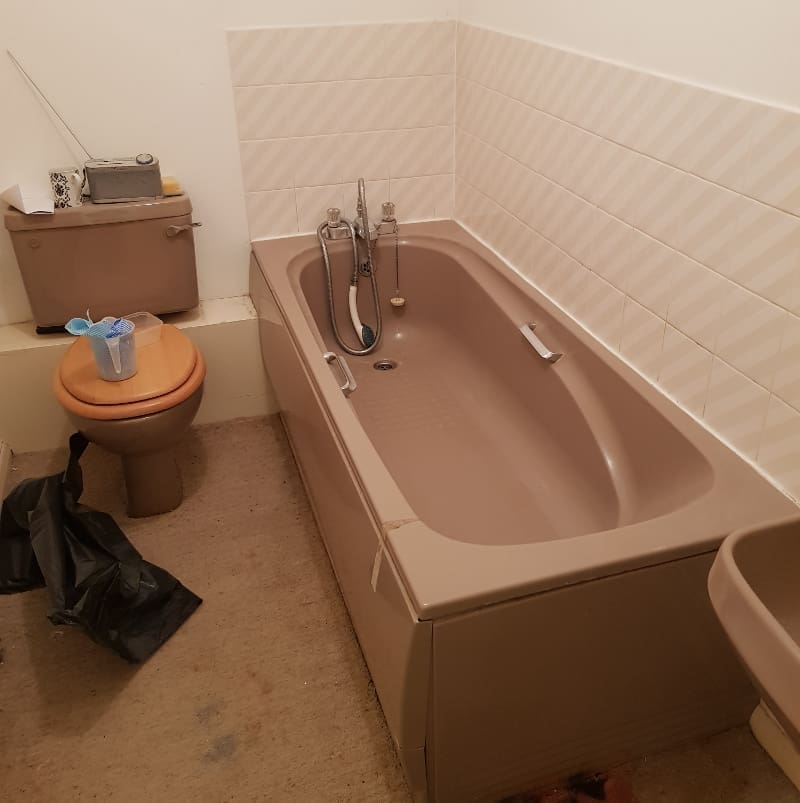
The first task was to remove the existing dusky pink-coloured suite, which quickly filled a Hippo bag with waste. With the old suite removed, the walls were prepared to receive the new wall cladding. This was followed by fitting the new WC, basin, and vanity unit, as well as the Luxor walk-in bath.
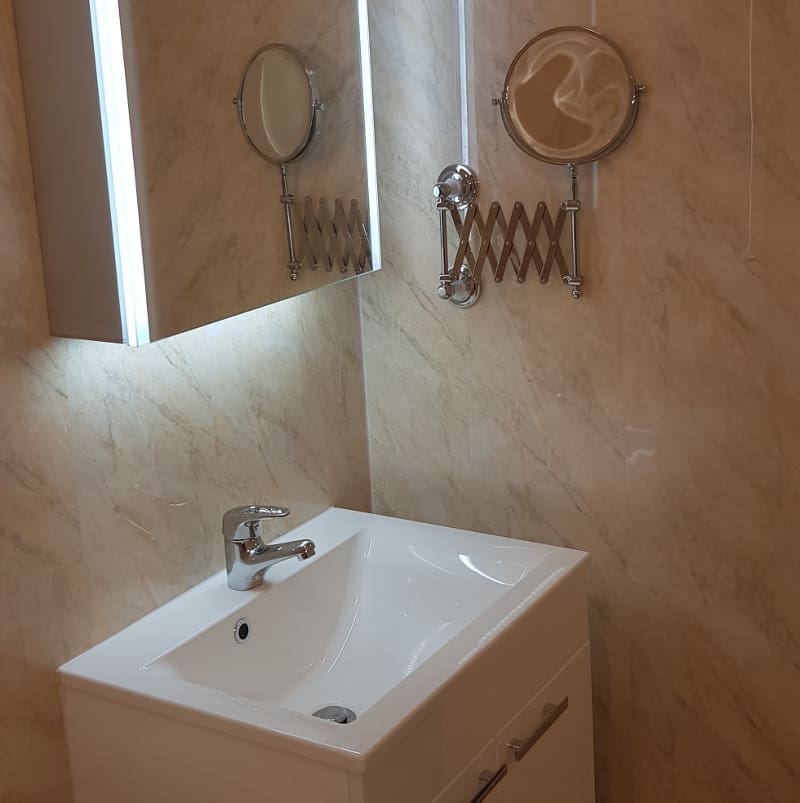
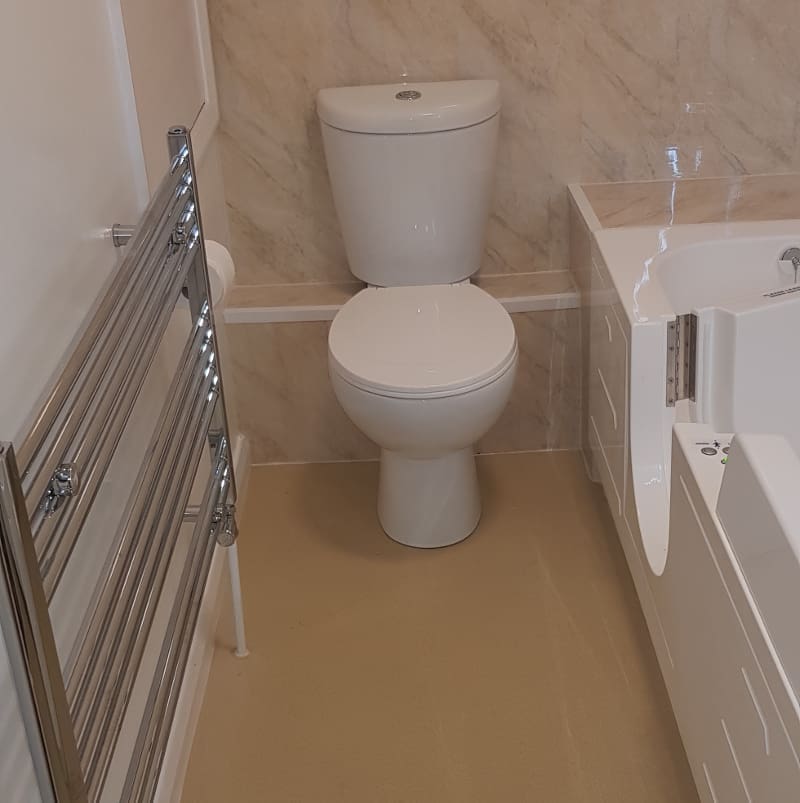
The bath was fitted with a pump to ensure the bath filled quickly. Accessories such as a bathroom cabinet with integral light and grab rails above the bath to aid with entry and exit were also fitted. The final job was laying Altro anti-slip flooring to finish the bathroom and provide a safer floor.
Conclusion
For Mrs T, the transformation of her bathroom was truly life-changing. By replacing her old bath with a more accessible alternative, she no longer had to worry about how to get out of the bath with arthritis. The new design gave her the freedom to bathe safely, comfortably, and without fear of slipping or straining her joints. Most importantly, it restored her confidence and independence. Mrs T was delighted with the results, and her story shows just how much of a difference the right adaptations can make to everyday life.
How to Get Out of the Bath with Arthritis and Other Frequently Asked Questions
How can I make it easier to get out of the bath with arthritis?
Using grab bars or a bath lift can provide extra support and reduce strain on your joints. These simple solutions make bathing safer and more manageable.
Are walk-in baths good for people with arthritis?
Yes, walk-in baths are designed with low entry doors, making it much easier to step in and out without bending or lifting your legs too high. They’re a popular choice for those wondering how to get out of the bath with arthritis.
What is the safest way to get out of the bath if I have arthritis?
If you’re wondering how to get out of the bath with arthritis, going slow and steady is the best way to mitigate accidents. Move slowly, use support such as a grab rail, and avoid sudden movements. Slip resistant flooring can also prevent slips when stepping onto wet flooring.
Can bath lifts help with arthritis?
Absolutely. A bath lift gently lowers you into the water and raises you back out again at the push of a button, taking away the physical strain of climbing in and out.
Do I need a full bathroom renovation to make bathing easier?
Not always. Simple additions like grab rails or bath seats can make a big difference. However, for long-term comfort, many people choose walk-in baths or accessible showers.
What to do if you can’t get out of the bath?
If you find yourself stuck, stay calm and use any nearby grab rails for support. If needed, call for help. To prevent it from happening again, consider aids like a bath lift, a walk-in bath or wet room. Perhaps speak to your local healthcare team about getting a panic button for occasions such as this.
How to get in and out of a bath with bad knees?
Support your weight with grab rails try to reduce bending. Moving slowly and using non-slip mats can also help protect your knees from extra strain.
How do seniors get in and out of a bathtub?
Many seniors rely on grab rails, bath lifts, or walk-in baths to make bathing safer. These solutions reduce the risk of slips and make it easier to bathe independently.
Is a bath good for arthritis?
Yes, warm baths can help soothe stiff joints and ease muscle pain. However, make sure you can get in and out safely by using the right supports or adaptations.