Accessible bathroom ideas are becoming increasingly important as more households struggle with unsuitable housing. The 2019-20 English Housing Survey revealed that 53% of households (one million) still lack the bathroom adaptations they need – up from 45% (864,000) in 2014-15. A third (33%) of households requiring changes say their home is unsuitable and would prefer to move. While these figures provide only a topline view and variations exist within them, they highlight a growing challenge across the UK property sector. As the population ages and more people adapt to the changing housing market, the demand for practical and affordable solutions is rising.
For those that have assessed their options and are able to start a new bathroom project we have put together 15 accessible bathroom ideas worth considering as part of your bathroom adaptation.
1. Integrate Calming Blue Tones into Your Bathroom Design
Integrating calming blue tones into your bathroom design can create a tranquil and soothing atmosphere. Blue is often associated with feelings of calmness, relaxation, and serenity. By incorporating shades of blue into your bathroom, such as on the walls, tiles, or accessories, you can create a spa-like ambiance that promotes relaxation and rejuvenation. Disabled showers or walk-in baths do not have to be clinical. Speak to our expert design to find out how your prefered colour scheme can be integrated into your bathroom renovation project.
2. Unwind In a Tub-Style Walk-In Bath
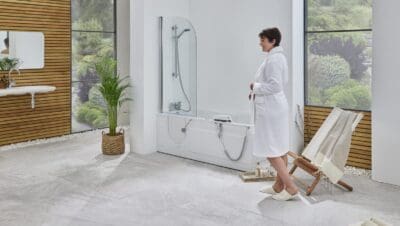
There are several styles of mobility baths to choose from, depending on your needs and preferences. Options include walk-in shower baths with a dedicated showering area, traditional-style walk-in baths with an integrated door, and compact tub-style walk-in baths designed for an upright seated position.
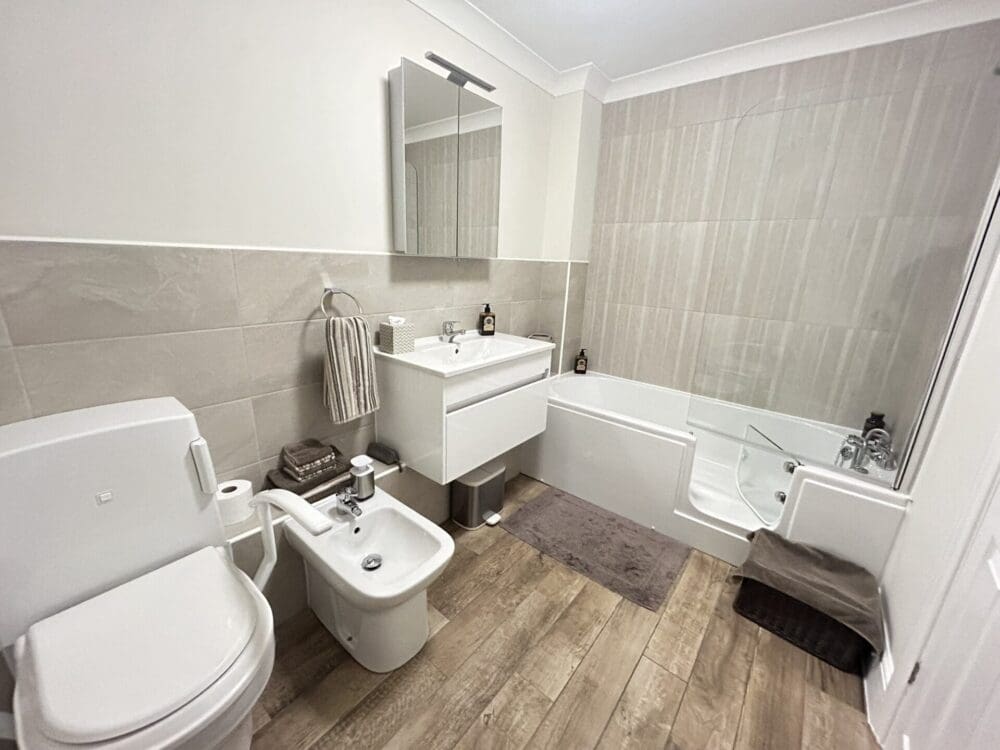
Tub-style walk-in baths are often the most practical choice for those who need to transfer from a wheelchair or walking aid. Models like the Tranquility feature an extra-wide door, making it easier to slide across from a chair, particularly when the seat height is aligned with the bath. While a level access shower or wet room may be the best option for many wheelchair users, a walk-in bath can still be a great solution. It provides the chance to relax and enjoy a long soak – even to read a book – offering a different experience to showering.

3. Accessible Bathroom Ideas for Heating
Underfloor heating is a popular accessible bathroom idea that not only keeps your bathroom warm, but also saves space. Unlike traditional radiators that take up valuable wall space, underfloor heating is installed beneath the floor and evenly distributes heat throughout the room. This type of heating system is particularly beneficial for those with limited space or for rooms with awkward layouts where radiators may be impractical. Underfloor heating also provides a more consistent and comfortable temperature distribution compared to radiators.
4. Breath life into your bathing space with bathroom plants
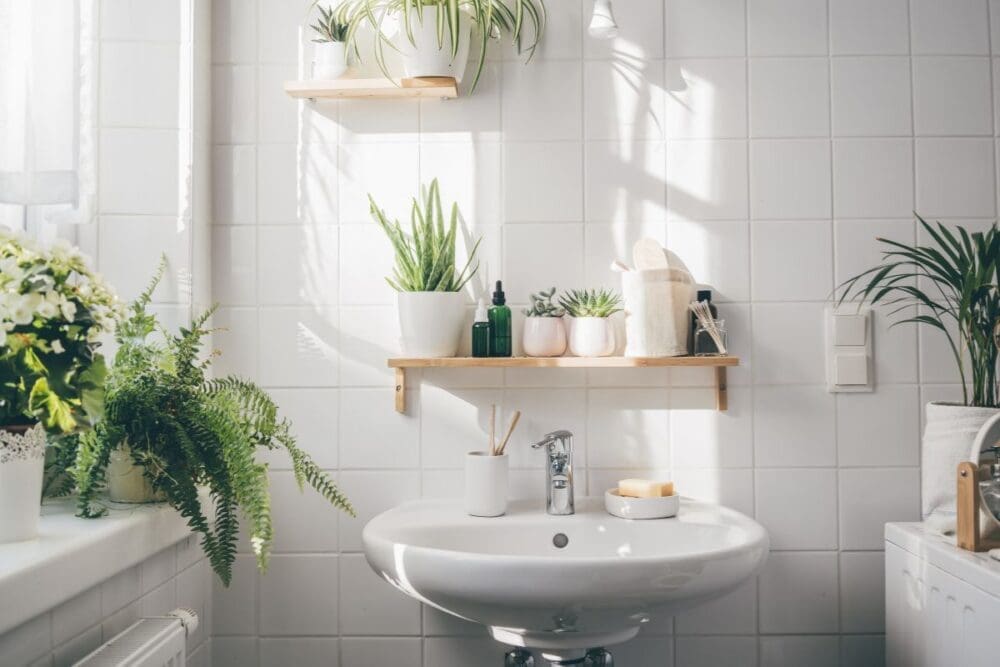
Adding plants to your bathroom not only enhances the visual appeal of the room, but they also have various benefits. Plants help to improve air quality by producing oxygen and filtering out pollutants. Additionally, certain plants thrive in humid environments, making them perfect for regularly used bathrooms. From small potted plants to hanging ivy or even a tall tower plant, a bit of greenery can make make for a more healthy, more relaxing space. And its a really affordable accessible bathroom idea too!
4. Stylish Grab Bars in Contrasting Colours
Grab rails are essential for physically disabled people as they provide stability and support whilst moving around in the bathroom. By using contrasting colours for these grab bars, it not only enhances their visibility but also adds individuality to the overall bathroom design. This makes the bathroom more inclusive and user-friendly for individuals, and is often regarded as a vital independent living aid, reducing the risk of falls when correctly specified and installed.
5. Rehang the Bathroom Door to Open Outwards
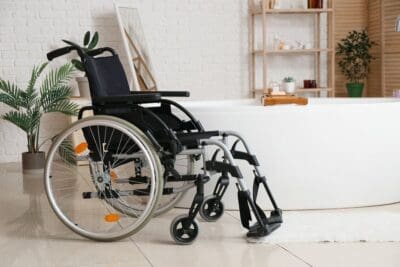
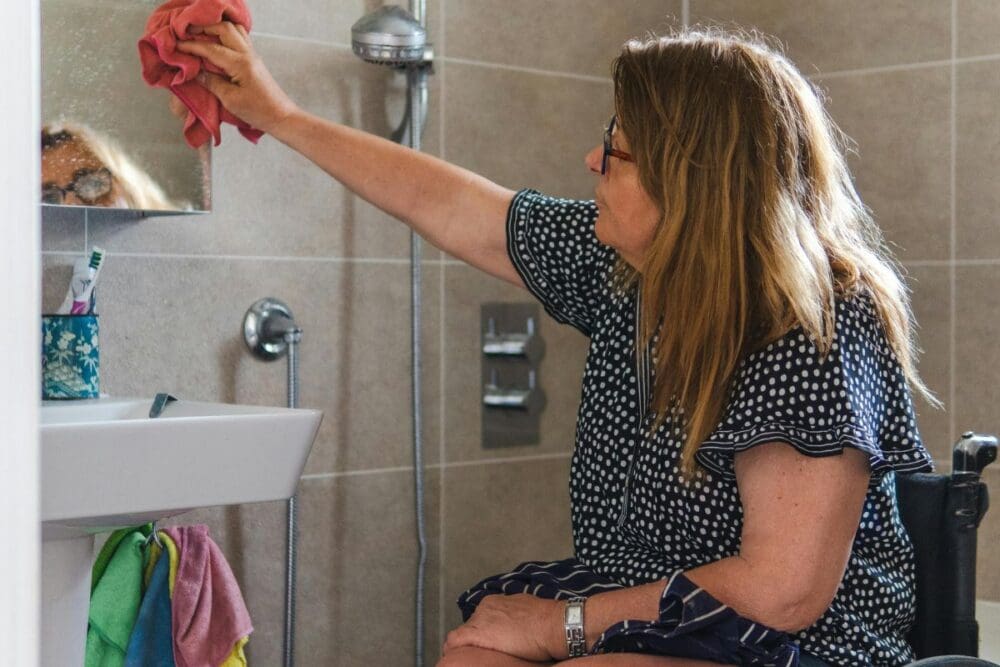
Rehanging bathroom doors to open outwards is one of the most important bathroom adaptations for wheelchair use. This design change allows for extra space inside the bathroom, making it more wheelchair accessible. Additionally, an outward opening door eliminates the risk of the door blocking access or becoming an obstacle within the bathroom. Overall, this simple modification can greatly enhance the functionality and inclusivity of an accessible bathroom.
6. Add Interest and Texture with Upcycled Items and Ornaments
Upcycling is the process of repurposing old or discarded items into something new. By incorporating these unique pieces into your accessible bathroom design, you not only add visual interest but also contribute to sustainability by reducing waste. Whether it’s repurposing vintage clip top jars as storage containers, or adding a touch of whimsy with upcycled ornaments, these elements can add character and charm to your accessible bathroom space.
7. Large Mirrors for that Feeling of Space
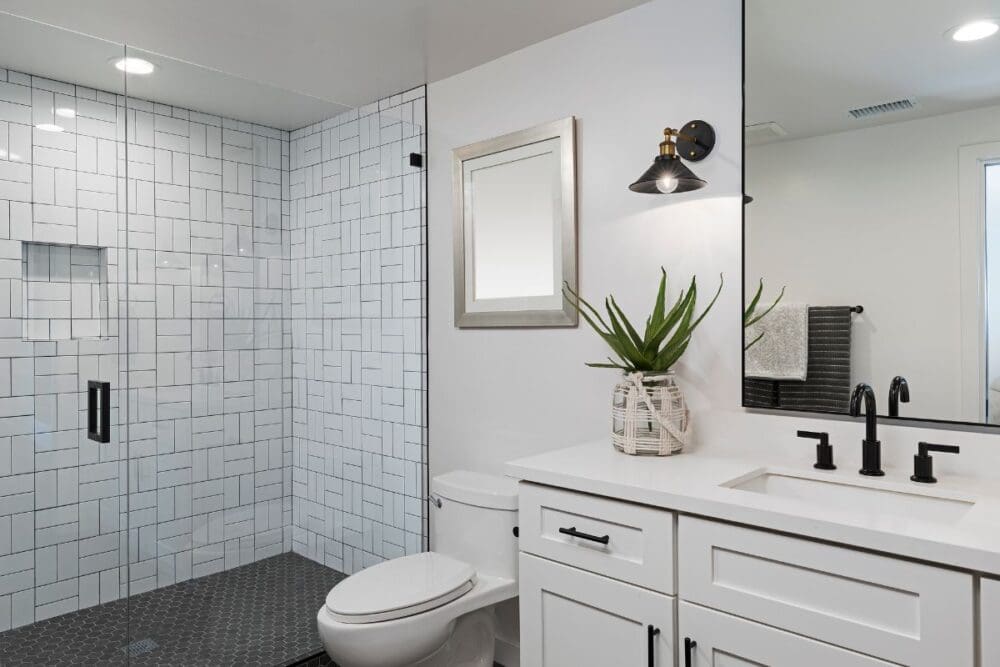
Large mirrors in an accessible bathroom can create the illusion of more space by reflecting natural light and expanding the visual layout of the room. Mirrors can also enhance the overall look of the bathroom, adding a touch of elegance and luxury to the space. Whether placed above the vanity or on a full wall, large mirrors are a brilliant accessible bathroom idea for those seeking to maximise the perceived size of their disabled bathroom.
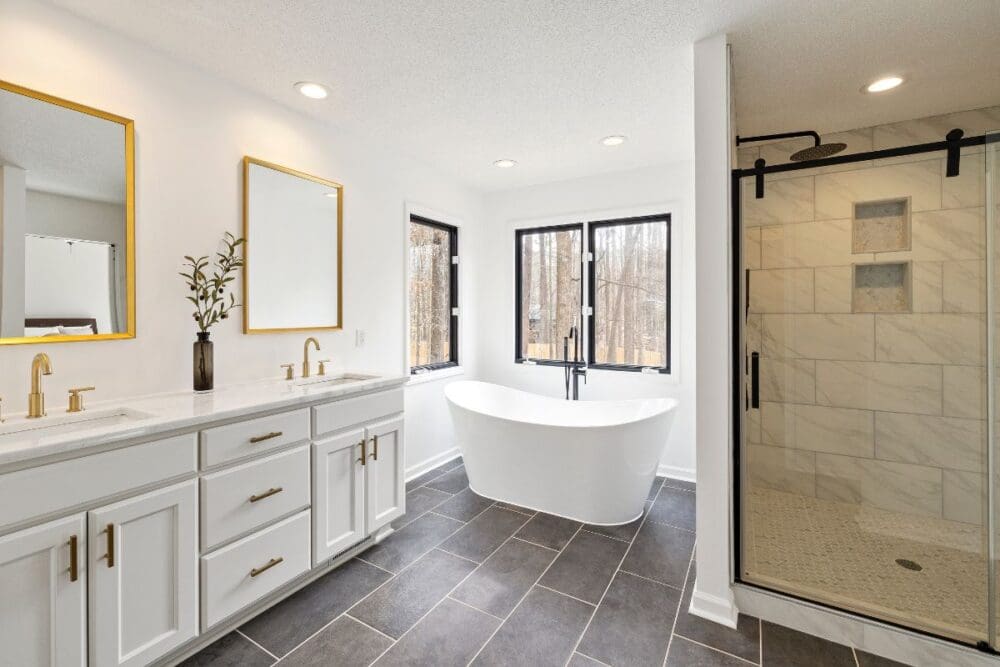
8. Select a Wet Room Design for Roll-in Wheelchair Access
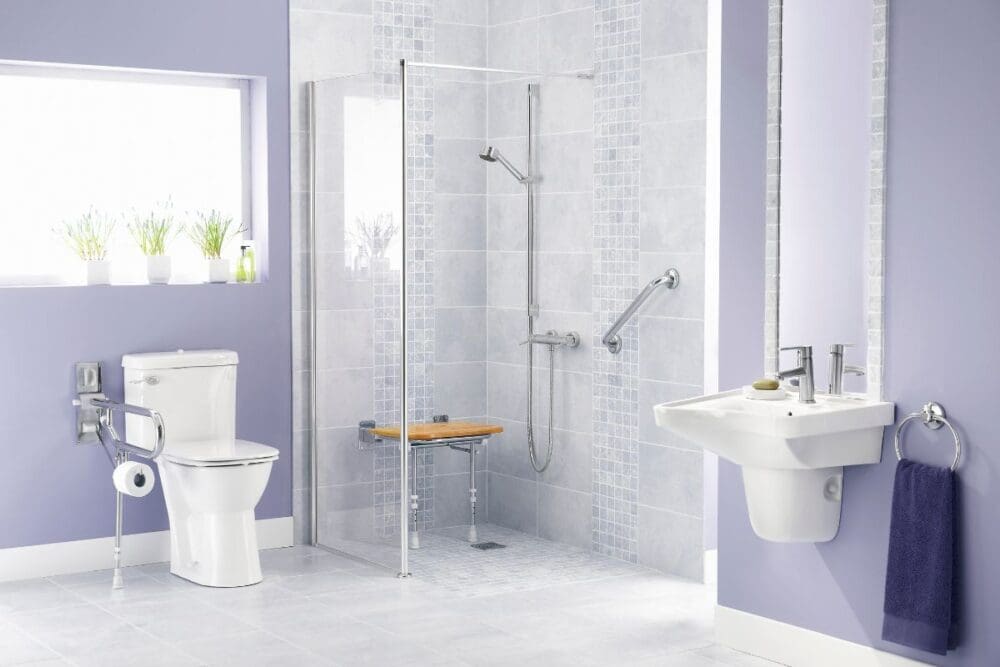
When designing a wet room for roll-in wheelchair access, it is important to choose a design that not only meets the practical needs of the bather but also provides them with a sense of comfort, and independence. Some factors to consider include the size of the wet room, the placement of fixtures and fittings, the choice of flooring materials to offer an anti-slip surface, and the inclusion of grab rails and support bars for added safety.
Wet room formers enable a roll-in shower area to be created with zero threshold and the ideal drop for drainage, this means that bathers can access the shower area in a shower safe wheelchair and remain seated with no steps or barriers if they choose. Other use cases may require the use of a shower chair or bench that the bather can transfer to once they are inside the bathing area.
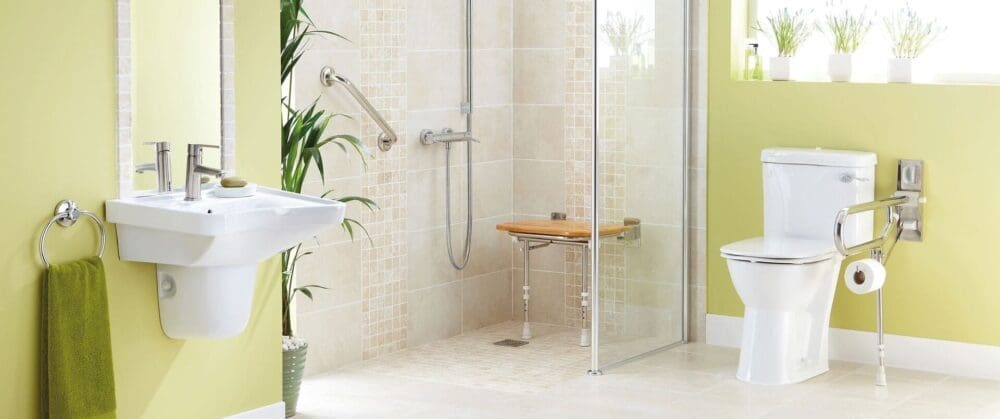
9. Handsfree Accessible Shower Design
A remote control shower provides the perfect bathing experience every time by giving you full control over your shower settings. With just a push of a button, you can adjust the water temperature, water flow, and on some models even the type of shower spray. This means that whilst the bather is getting changed, the shower can get up to temperature and they do not get wet when they initially turn it on. The thermostatic controls mean that if set correctly, the water will never be too warm or cold. Some units even remember previously set temperatures.
10. Stylish Slip-Resistant Tiles for a Touch of Luxury
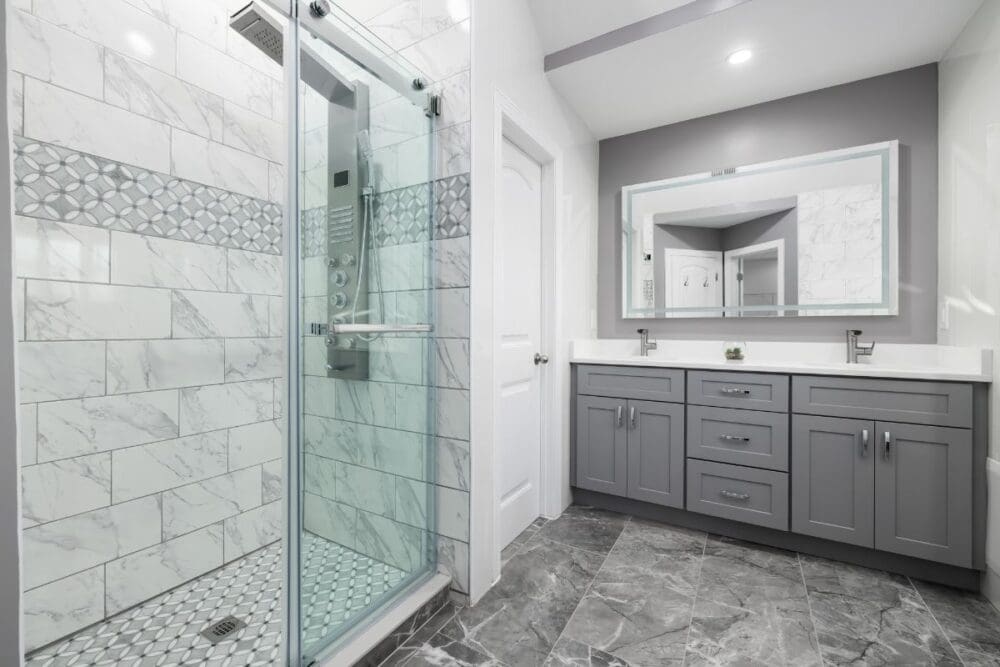
With their stylish designs, slip-resistent tiles can enhance the overall look of the room separating it from those that use wall panels and vinyl flooring which can feel more clinical or commercial. The anti-slip feature ensures the safety of users, reducing the risk of accidents and falls. Tiles with a PTV value of 36+ indicate that a tile has a high level of slip resistance, making them ideal for wet areas such as accessible bathrooms. You will sometimes also see these tiles listed as R11 or R12 tiles, but the British standard is to use PTV. Whether you have a traditional or contemporary bathroom, these tiles can add a touch of elegance and functionality to your space.
11. WC Odour Extraction Units – Fresh Everytime
WC odour extraction units are specifically designed to eliminate any smells that may arise from toilets. These units work by actively purifying the air and removing any odor-causing particles, leaving and accessible bathroom smelling fresh and clean. Whilst not necessarily essential, this technology removes the need for handling chemicals like air fresheners, which in certain independent living scenarios could be very beneficial.
12. Accessible Light Switches – Motion Sensors
Motion sensor lights use motion detection technology to automatically turn on when someone enters the bathroom, providing illumination without the need for fumbling in the dark for light switches. This feature is particularly important for individuals who may have difficulty navigating a bathroom at night or for those who require assistance when using the bathroom. By incorporating motion sensor night lights into accessible bathroom designs, it helps promote independence, reduce accidents, and creates a more user-friendly environment. They are essential independent living aids.
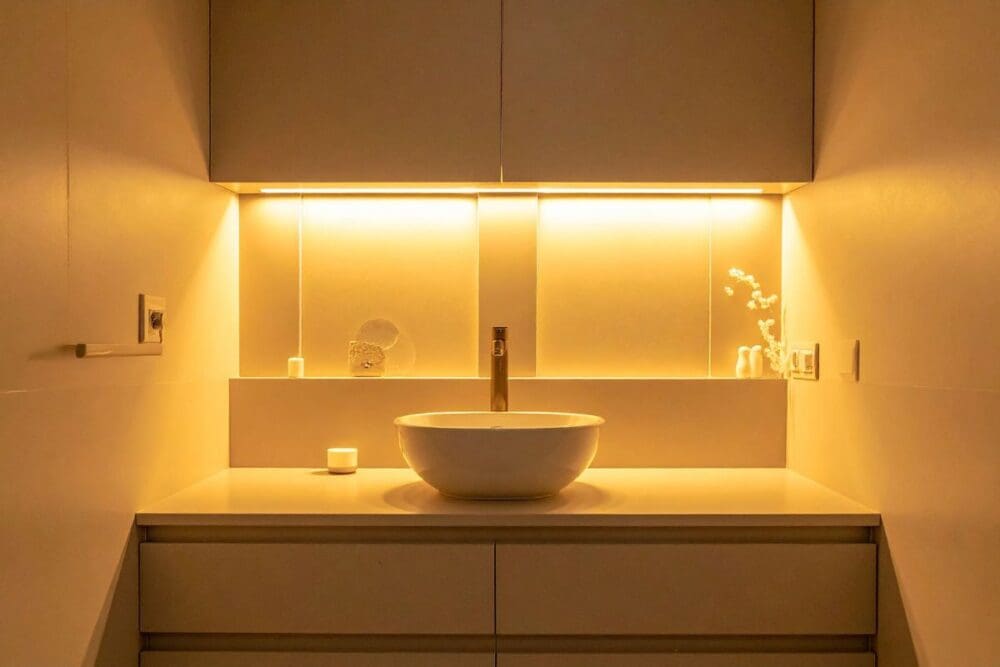
13. Touch-Free Cistern Flush Mechanism
Touch free cistern flush valves use infrared sensor technology that detects the user waving their hands and automatically flush the toilet without the need for physical contact. This touch-free feature is not only more hygienic, but is more easy to use for people with artheritis or other conditions affecting the hands. Furthermore, these valves are sometimes programmable, allowing the flush volume and duration to be adjusted, making them more water-efficient compared to traditional flush systems.
14. Smart Hygiene with a Combined Toilet Bidet and Dryer
This all-in-one type of sanitarywear combines the functionality of a toilet, a bidet and a dryer and is a fantastic solution that can support more independent living. They use water for cleaning after using the toilet, and a dryer, which ensures thorough cleaning without the need for toilet paper. Additionally, the integrated dryer eliminates the need for using towels or toilet paper, reducing waste and promoting sustainability, a fantastic independent living aid.
15. Try Integrating Bold Colours with Your Design
Colours are crucial in helping people who are visually impaired in accessible washrooms. Solid, bold colours can help highlight the edges of fixtures. For example, a black toilet seat against a white toilet.
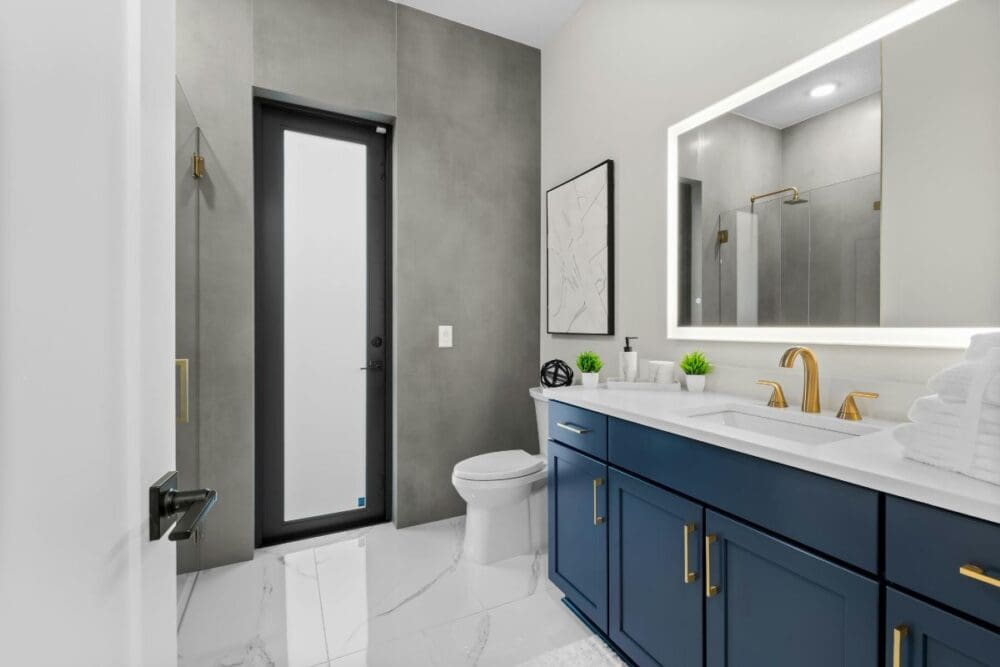
There are so many accessible bathroom ideas to update your current bathroom into a stylish, comfortable space. If you or somebody you care for is considering adapting their current bathroom, shower room or wet room, please contact our expert team for advice, download a brochure, or request a no obligation home visit.
Frequently Asked Questions
What makes a bathroom “accessible”?
An accessible bathroom is designed to be safe, comfortable, and easy to use for people with mobility challenges, disabilities, or ageing-related needs. This often includes features such as level-access showers, walk-in baths, grab rails, non-slip flooring, and wider doorways
Do I need a full bathroom remodel to make it accessible?
Not always. Depending on your needs, simple accessible bathroom ideas like adding grab bars, raising the toilet seat, or installing a fold-down shower chair can make a big difference. For more advanced needs, Absolute Mobility can design and install bespoke solutions like walk-in baths or wet rooms.
How can I make my bathroom safer for someone with limited mobility?
Safety can be improved with slip-resistant flooring, strategically placed grab rails, accessible taps and controls, and adequate lighting. Walk-in showers or baths with low entry points also reduce the risk of trips and falls.
How can i make an accessible bathroom more stylish?
Modern accessible bathrooms combine practicality with style. At Absolute Mobility, we offer a wide range of designs, finishes, and fixtures that make your bathroom both safe and attractive.
Will an accessible bathroom increase the value of my home?
Yes, in many cases. Accessible bathrooms appeal to buyers who prioritise safety, ageing-in-place, or futureproofing their home. They’re also a smart investment for your comfort and independence.
Can Absolute Mobility tailor a bathroom to my specific needs?
Absolutely. We specialise in bespoke solutions, whether that’s a walk-in bath, a level-access shower, or tailored height fixtures. Our team works closely with you to ensure the bathroom fits your lifestyle and requirements.